A Short History of Mohair: From Angora Goats to Your Closet
Mohair has a history spanning centuries and continents, long before it became a beloved fiber for hand-knitted sweaters. Here's the fascinating journey of how it went from ancient goat herds to your closet today.

Ancient Origins in Anatolia
Mohair comes from the Angora goat, a breed believed to originate in the Anatolia region of modern-day Turkey thousands of years ago. The word "mohair" is thought to derive from the Arabic "mukhayyar," meaning "choice" or "select fabric," a nod to how prized the fiber has always been.
A Fiber Fit for Royalty
For centuries, mohair production and export were tightly controlled, and the fabric was reserved largely for luxury textiles worn by nobility and the wealthy across the Ottoman Empire and beyond.
Spreading Across the World
In the 19th century, Angora goats were exported to countries with suitable climates, most notably South Africa and later the United States, particularly Texas. These regions remain major mohair producers today, alongside Turkey.
From Industrial Fabric to Fashion Statement
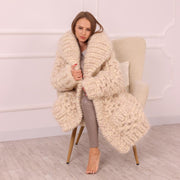
Throughout the 20th century, mohair was used in everything from upholstery to military uniforms thanks to its durability and warmth. It was hand-knitted sweaters and cardigans, however, that eventually made mohair a beloved fashion fiber, prized for its soft halo and romantic, textured look.
Mohair Today
Modern mohair production emphasizes both quality and animal welfare, with many producers following strict ethical shearing standards. Today, mohair remains one of the most luxurious natural fibers available, and every hand-knitted mohair piece carries forward thousands of years of craft and tradition.